
How to Organize a Playroom That Grows With Your Kids
A well-organized playroom should grow with your child—not become overflowing with toys. The key is creating simple, flexible systems that are easy for kids to maintain while regularly decluttering what they no longer use. Habitual Home Organizing teamed up with Clarity by Kathy to share our combined perspective as professional organizers and experienced childcare providers, giving you practical tips to create a playroom that works for both kids and parents.
Start by Decluttering
Every few months, and especially before birthdays or holidays, go through toys and remove:
Broken toys or games with missing pieces
Outgrown baby toys
Toys your child no longer plays with
Books and puzzles they've outgrown
If your child struggles to let go, create a "Time Will Tell" Box. Store the toy away for a few months. If they don't ask for it, it's probably ready to be donated. Rather than saying you're getting rid of toys, try saying you're finding another family who will love them. This helps children build healthy habits around letting go.
Create Simple Systems
The best organizing systems are the ones your kids can maintain on their own. We find that many children are happy to help clean up when the system is simple and intuitive. If putting something away takes more than one or two steps, it's probably too complicated.
Group similar toys together and keep categories broad, especially for younger children. One large LEGO bin is much easier to maintain than sorting by color or by set. As children get older, they may enjoy more detailed organization, but starting with simple categories sets them up for success.
For younger children, use picture and word labels since most kids are visual learners. As they become confident readers, written labels and clear bins are usually enough.
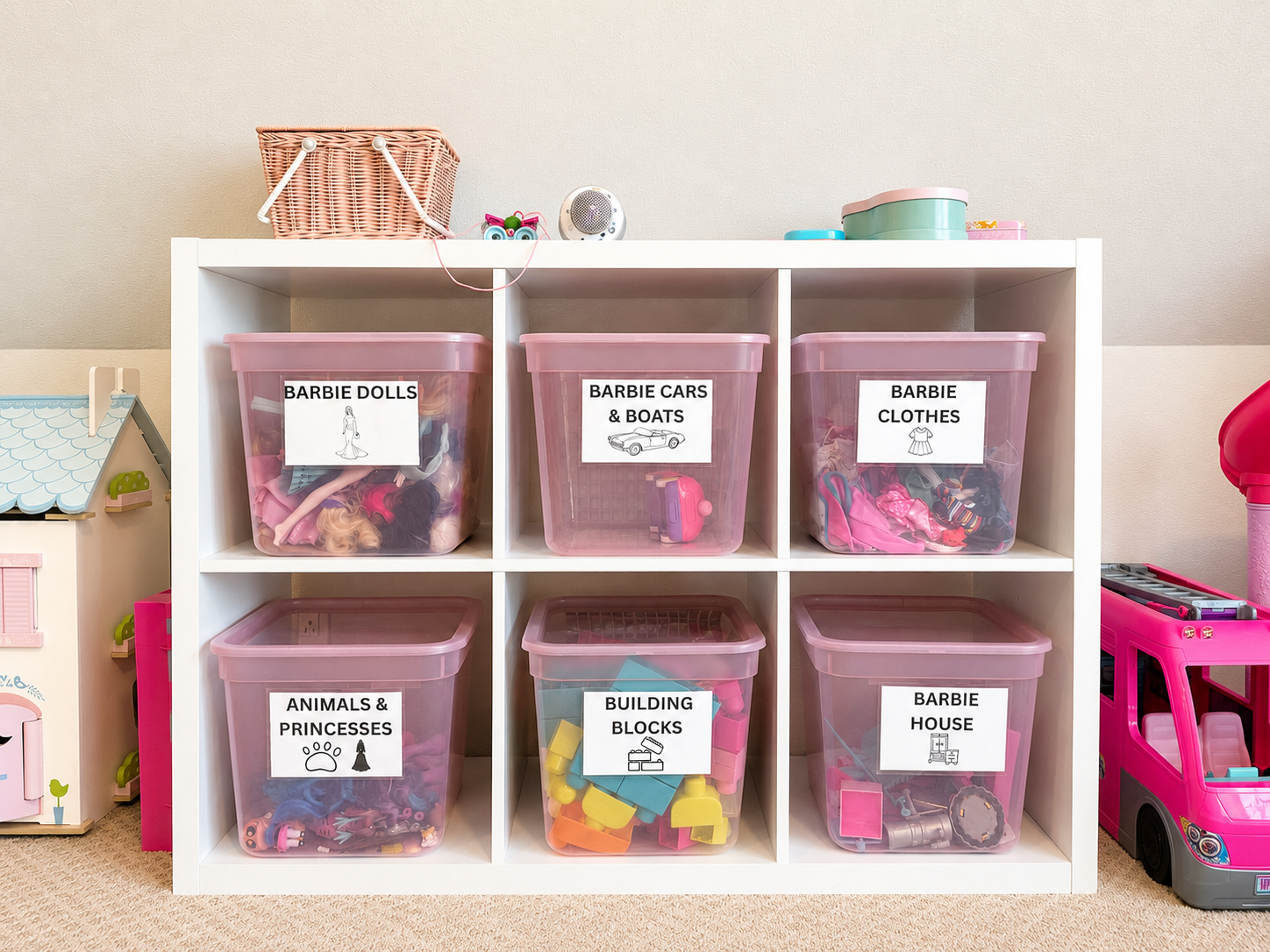
These pink clear bins add a fun pop of color while making it easy for kids to see, find, and put away their toys. Clear storage helps keep everything visible, making cleanup simpler and more intuitive.
Choose Storage That Can Grow
Storage systems like the IKEA TROFAST make it easy to adjust categories as your kids' interests change over time. Cube organizers also work well for baskets, books, and games, while rolling utility carts are a great option for organizing art supplies for older children.
Let the Container Set the Boundary
Instead of constantly saying "no more toys," let the storage container be the limit. When the LEGO bin is full, ask, "What should we donate to make room for this new one?" This gives kids ownership over their belongings while teaching that every item needs a home.
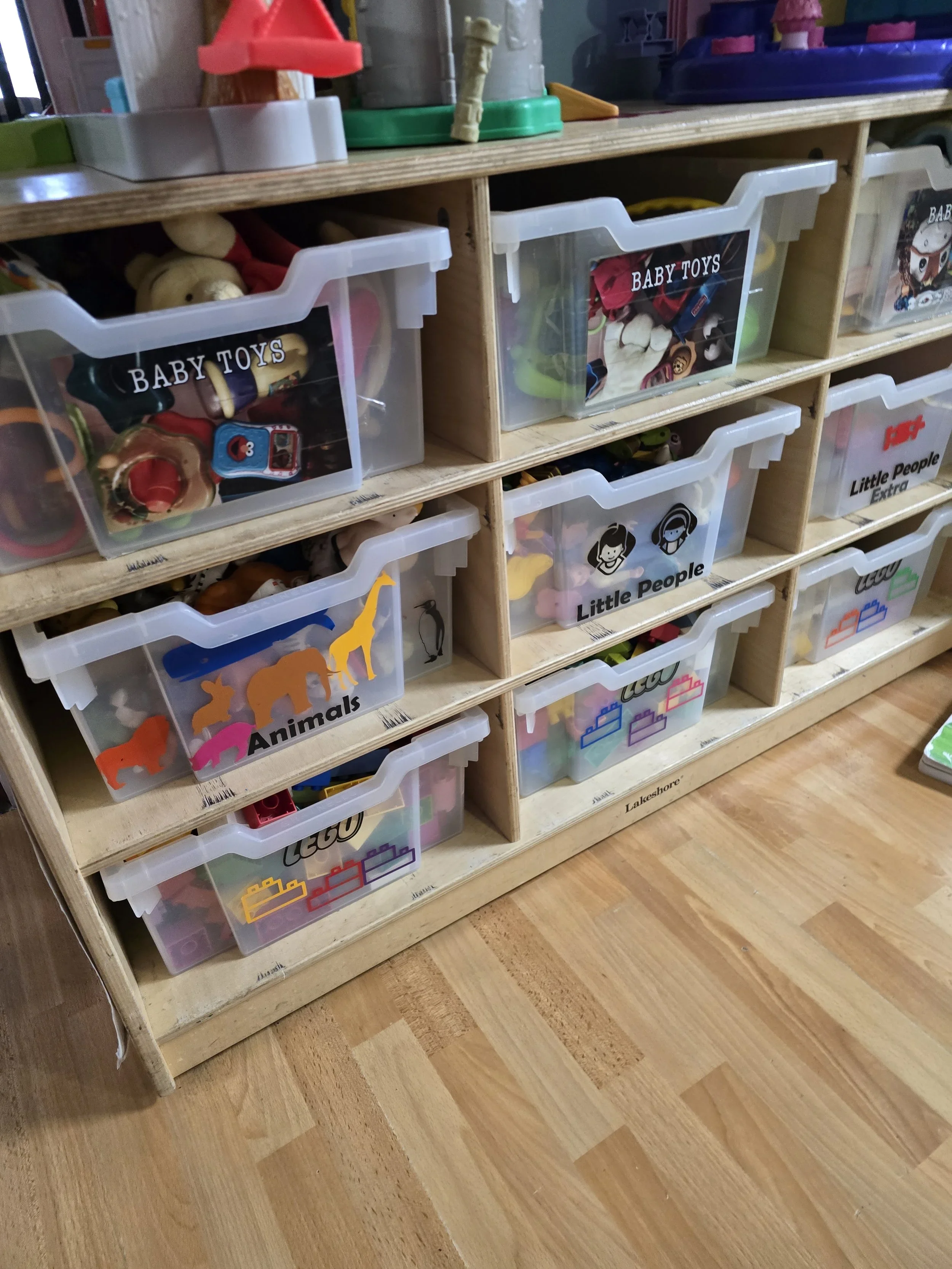
This toy storage system makes it easy for young kids to find what they're looking for and put everything back when they're finished. Simple, clearly defined categories encourage independence and make cleanup much less overwhelming.
Rotate Toys Instead of Displaying Everything
Not every toy needs to be out all the time. Rotate less-used toys, dress-up clothes, and seasonal favorites every few months. This keeps the playroom feeling fresh while reducing visual clutter, and children often rediscover toys they haven't seen in a while.
Create Kid-Friendly Book & Dress-Up Storage
Display books where children can easily see them. Front-facing bookshelves work well for toddlers because they can see the covers, while older kids may enjoy organizing books by genre, reading level, or even rainbow order.
For dress-up clothes, use child-height hooks or a small clothing rack with a labeled bin for accessories like crowns, capes, and masks.
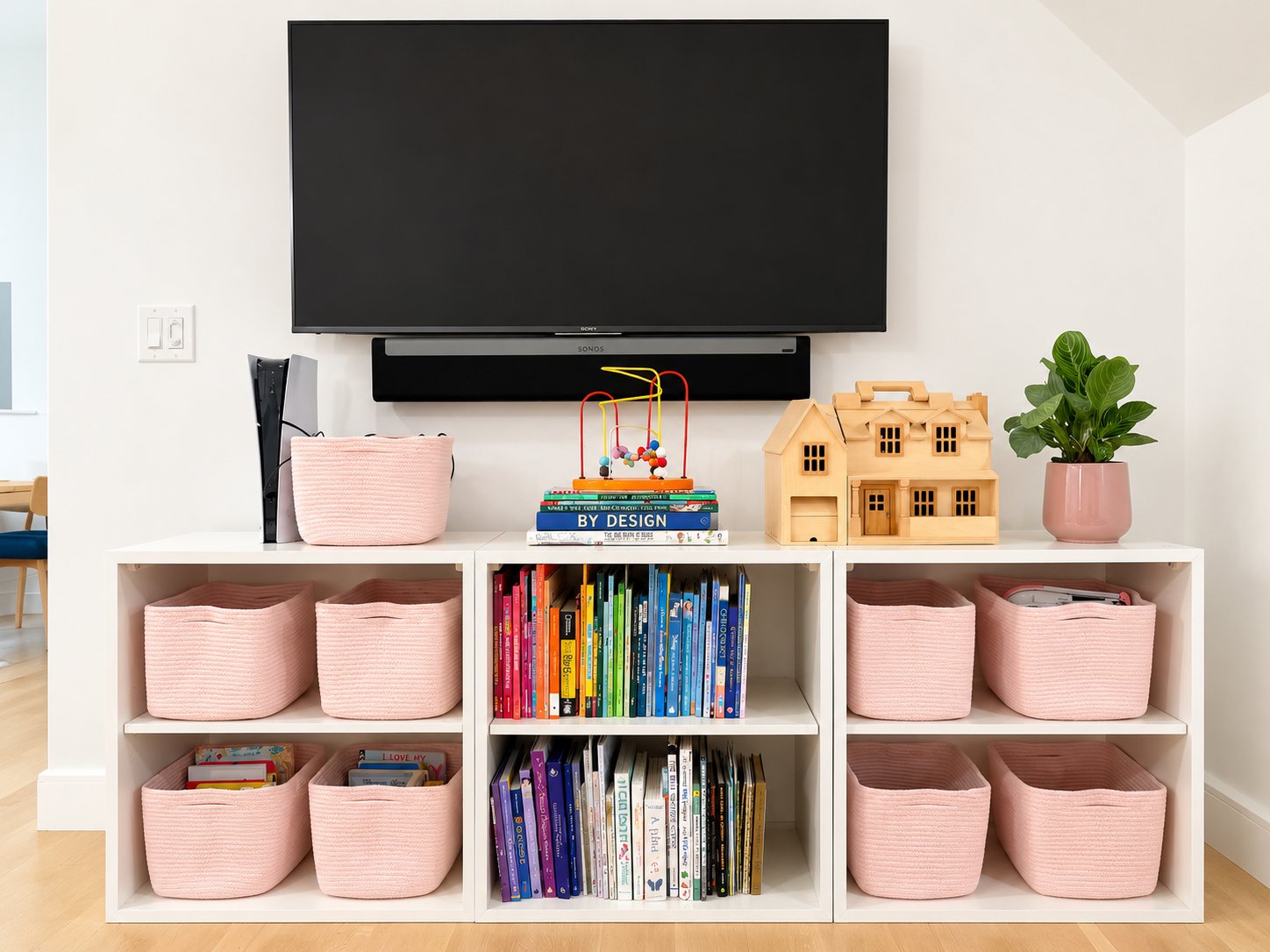
We love this simple, color-coded book display! It makes books more visually appealing, easier for kids to see and choose from, and encourages independent reading while keeping the bookshelf organized.
Rethink Gift Giving
If toys seem to multiply every birthday and holiday, encourage family to give experience gifts like zoo memberships, museum passes, classes, or special outings. Gifts that build on existing collections, like more LEGOs or magnetic tiles are often easier to store than starting entirely new toy categories. Consumable gifts such as art supplies, bubbles, bath paint, or favorite treats are another clutter-free option.
Remember
The goal isn't a picture-perfect playroom, it's a space that's functional, easy for your kids to clean up, and designed to grow alongside your family. By keeping systems simple, setting natural boundaries, and decluttering regularly, you'll create a playroom that's easier to maintain for years to come.
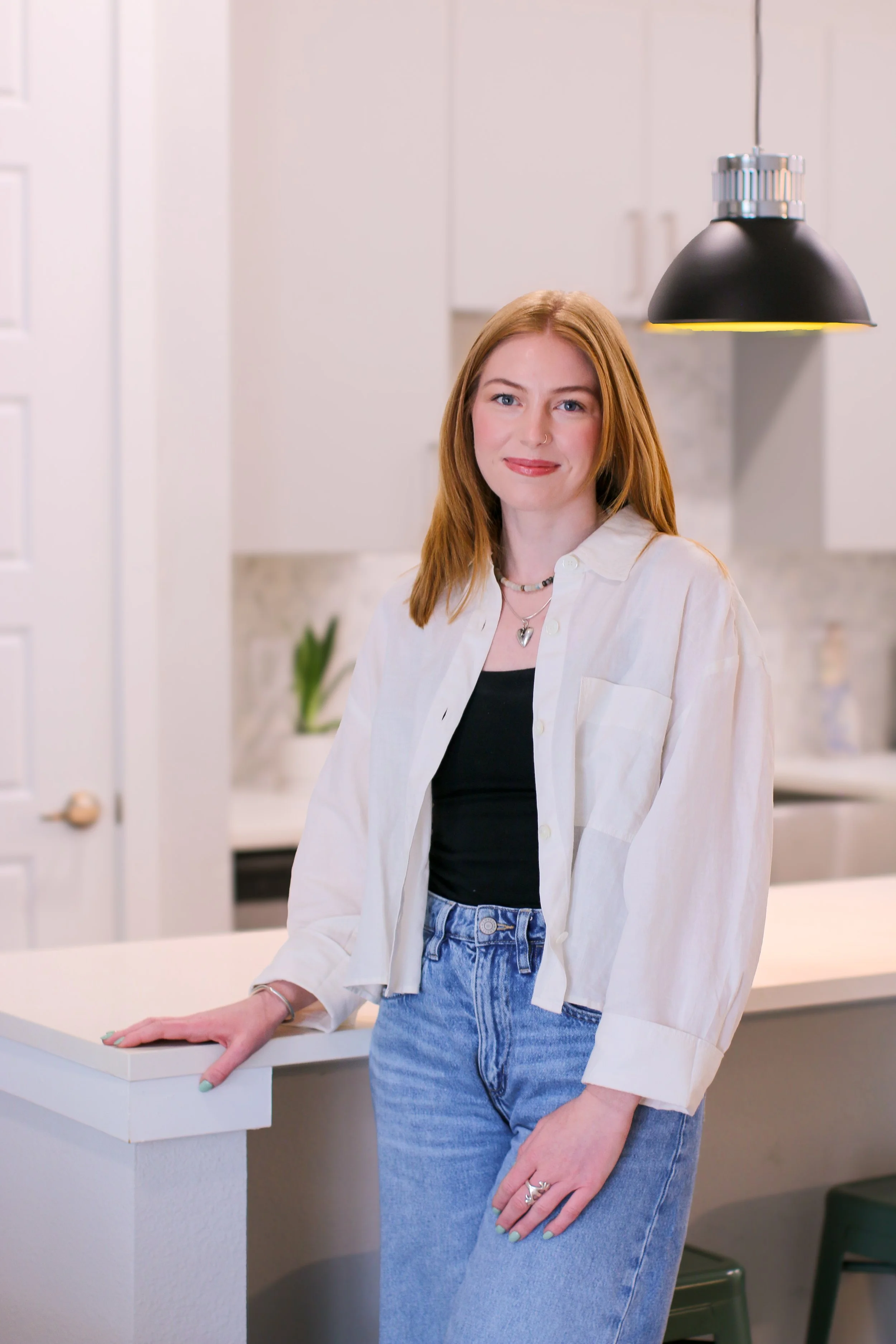
After earning a degree in Fashion Merchandising and Design, Catarina combined her passion for beautiful spaces with years of hands-on experience supporting busy families as a professional nanny. Today, she brings that unique perspective to Habitual Home Organizing, creating customized organizing systems that are both functional and visually beautiful. As a fully insured professional organizer, Catarina helps Austin families simplify their homes with solutions designed to last.

Kathy spent over two decades managing a home daycare while raising three boys—which means she's organized approximately one million toys (give or take). Through years of real-life problem solving, she developed family-friendly systems that grow with kids and keep playrooms from overflowing. A fully insured professional organizer, Kathy specializes in creating simple, sustainable solutions that reduce stress and bring calm back into the home.